
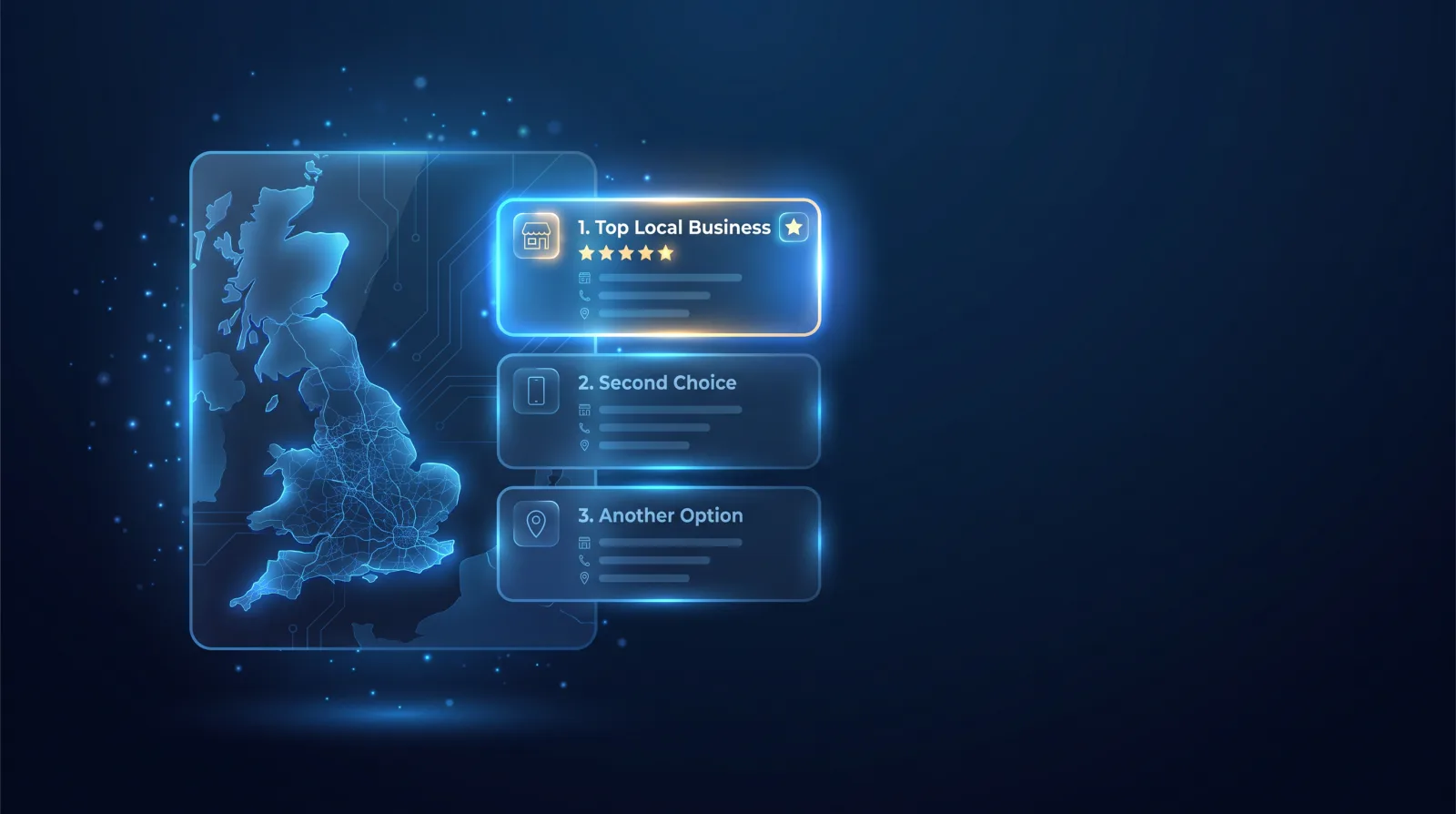
How Do You Rank in the Google Map Pack?
To rank in the Google Map Pack — the three business listings shown on the map at the top of local results — you need to win on Google's three local ranking pillars: proximity (how close you are to the searcher), relevance (how well you match the search), and prominence (how trusted and well-known you are). In practice that means a complete, active Google Business Profile, precise categories and services, and a steady stream of genuine reviews, consistent citations and local links.
The map pack is winner-takes-most: three spots capture the majority of local clicks, and everyone below fights over the scraps. This guide walks through exactly how to earn one of those spots. For the wider local picture, pair it with our complete local SEO guide.
What is the Google Map Pack and Why Does It Matter?
The Google Map Pack (also called the local pack or 3-pack) is the block of three local business listings, shown with a map, that appears at the top of search results for queries with local intent — "plumber near me", "accountant Birmingham", "best coffee Digbeth".
Why it matters so much:
- It sits above organic results — often above everything except ads, capturing attention first.
- It wins the majority of local clicks — most people choose from the three businesses shown rather than scrolling.
- It drives direct action — calls, direction requests and website visits happen straight from the listing.
For any business serving a local area, appearing in the map pack is frequently more valuable than any traditional organic position.
How Does Google Decide Who Ranks in the Map Pack?
Google's local algorithm weighs three factors:
- Proximity — how close your business is to the person searching. This is dynamic: the same search returns different results depending on where the searcher is standing.
- Relevance — how well your profile and website match the query, driven by your categories, services, description and on-site content.
- Prominence — how established and reputable your business is, based on reviews, citations, backlinks and overall web presence.
You cannot change proximity, but you can strongly influence relevance and prominence. That is where a structured programme wins the top three, because most competitors optimise one and neglect the others.
How Do You Optimise Your Google Business Profile to Rank?
Your Google Business Profile is the foundation of map-pack ranking. Work through this checklist:
- Verify and complete the profile fully — no blank fields.
- Nail the primary category — the highest-impact single setting; add relevant secondary categories.
- Write a keyword-natural description covering your services and service area.
- List all services and products with descriptions.
- Set accurate hours (including special hours) and a correct service area.
- Upload genuine photos regularly — exterior, interior, team, work.
- Post weekly — offers, updates and news.
- Enable and monitor messaging and Q&A.
Our Google Business Profile guide covers each of these in depth.
How Important Are Reviews for Map Pack Ranking?
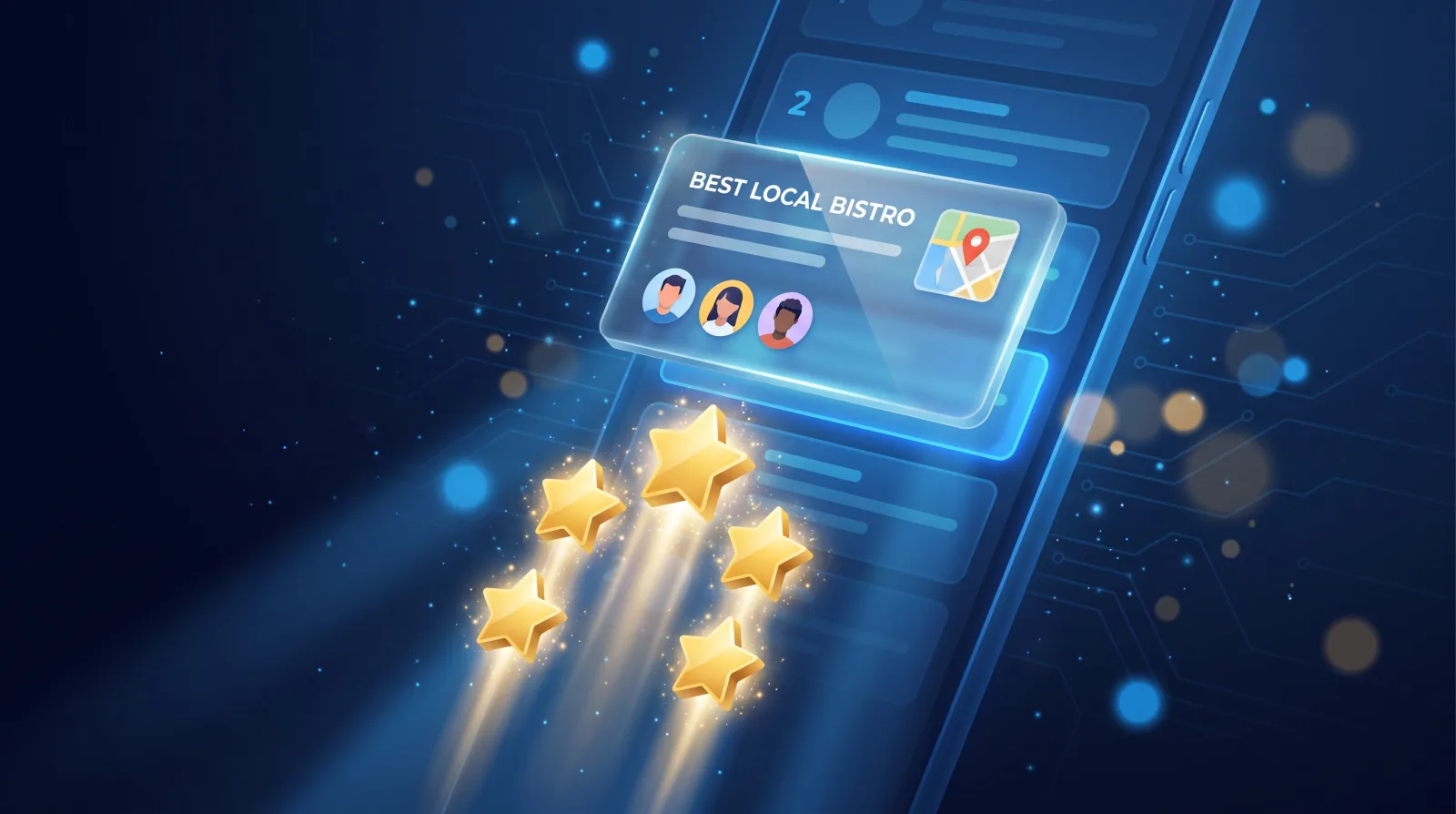
Reviews are one of the strongest prominence signals, and often the single biggest differentiator between the businesses in the map pack and those just outside it.
What matters:
- Volume — a steady flow of new reviews signals an active, popular business.
- Rating — a strong average (4.5+ ) both ranks and converts.
- Recency — fresh reviews carry more weight than old ones; a burst then silence looks unnatural.
- Keywords — reviews that naturally mention your service and location add relevance.
- Responses — replying to every review (positive and negative) is a trust and engagement signal.
Build an ethical, consistent process to request reviews from happy customers. Never buy or fake them — Google detects and penalises it.
How Do Citations and NAP Consistency Affect the Map Pack?
Citations — mentions of your Name, Address and Phone across the web — help Google confirm your business is legitimate and established. Inconsistent NAP data is one of the most common hidden causes of weak map-pack performance.
To get this right:
- Claim the core platforms — Google, Bing Places, Apple Maps, Facebook.
- Add reputable UK directories — Yell, Thomson Local, industry-specific sites.
- Keep NAP identical everywhere, down to formatting.
- Fix or remove duplicate and outdated listings, which confuse Google and split your signals.
A citation audit and clean-up frequently unlocks ranking gains faster than any other single action.
How Do Local Links and Website Signals Help You Rank?
The map pack is not decided by your profile alone — your website and its links reinforce prominence and relevance.
- Local backlinks from chambers of commerce, local press, community organisations and partners strengthen prominence.
- LocalBusiness schema on your site confirms your NAP, hours and location to Google.
- Location-relevant content — service and area pages with genuinely useful information — supports relevance.
- Technical health and speed — a fast, mobile-first site helps both map-pack and organic performance.
The businesses that dominate the map pack treat their local SEO profile and website as one connected system, not two separate jobs.
How Do You Rank in the Map Pack Across Multiple Locations?
Ranking in one area is one thing; ranking across several is harder, because proximity works against you the further a searcher is from your address.
Approaches that work:
- A real premises in each area is the strongest signal — but only if genuine (fake listings get suspended).
- Dedicated, unique location pages for each area you serve, each with distinct, useful content.
- Local citations and links specific to each area.
- Area-specific reviews that mention the locations you serve.
For a multi-area Birmingham and West Midlands business, this is exactly the challenge our Birmingham local SEO service is built to solve — expanding visibility beyond your immediate postcode without cutting corners.

What Are the Most Common Map Pack Mistakes?
Most businesses that struggle in the map pack are making one of these avoidable mistakes:
- An incomplete or unverified profile — blank fields and no verification cap your ranking.
- The wrong primary category — picking a vague or incorrect category kills relevance.
- Neglecting reviews — no process to earn them, or ignoring the ones you get.
- Inconsistent NAP across directories.
- Keyword-stuffing the business name — adding keywords you are not entitled to risks suspension.
- Going quiet — no posts, no new photos, no engagement signals a dormant business.
- Ignoring the website — expecting the profile to rank with no supporting site.
How Long Does It Take to Rank in the Map Pack?
It depends on competition and your starting point, but a realistic guide:
- New or neglected profile: expect 2–3 months to see meaningful movement once optimisation, citations and reviews begin compounding.
- Low-competition areas or niches: top-three rankings are achievable within 6–10 weeks.
- Competitive city categories (legal, dental, trades in Birmingham): 4–6 months or more to displace established, review-rich competitors.
The fastest gains almost always come from fixing the basics first — completing the profile, cleaning up citations, and closing the review gap. Keep the effort consistent, because map-pack positions require ongoing activity to hold. Want a shortcut? A free audit will show you exactly why you rank where you do and what to fix first.