
Why Use LinkedIn Ads for B2B?
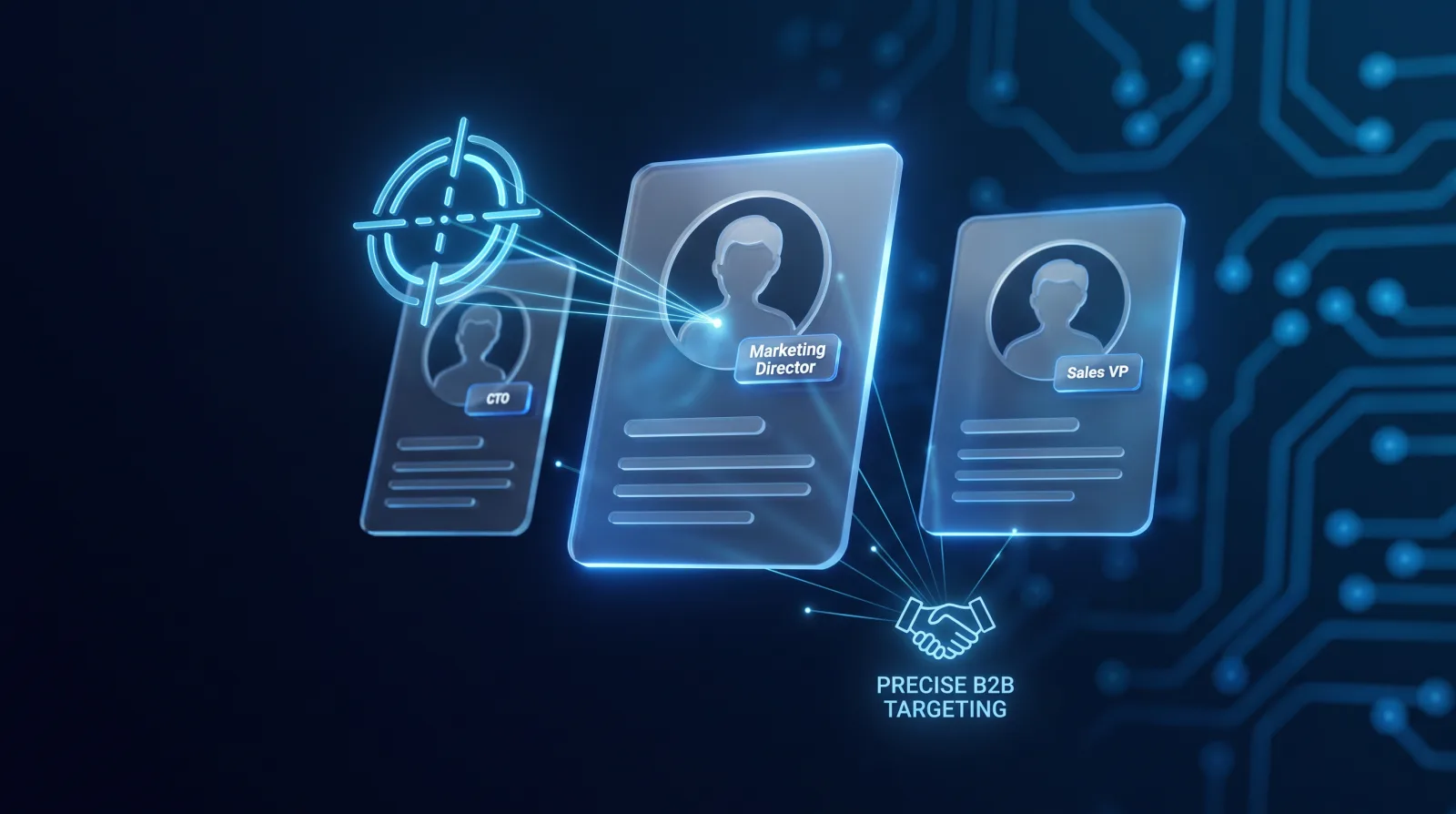
LinkedIn Ads are the standout channel for B2B advertising because they let you target exactly the right people, by job title, seniority, company, industry and skills, in the place where professional decisions get made. No other platform lets you put your message in front of, say, "Finance Directors at UK manufacturers with 200+ staff" as precisely.
That precision is why B2B marketers rely on LinkedIn Ads despite higher click costs than Meta or Google: you are paying to reach decision-makers, not the general public. For considered, higher-value B2B sales, reaching the right 5,000 people beats reaching the wrong 500,000.
This guide covers how LinkedIn advertising works, the ad formats, what it costs, what makes it convert, and how to measure return, so you can decide whether it fits your business and run it without wasting budget. For how it sits alongside other channels, see B2B SaaS marketing.
How Does LinkedIn Ads Targeting Work?
LinkedIn's targeting is its superpower, built on the professional data members provide. You can target by:
- Job title, function and seniority — reach the actual decision-makers and influencers.
- Company — by name, size, industry, or growth rate (great for account-based marketing).
- Skills, groups and interests — professional signals of relevance.
- Your own data — retarget website visitors, upload contact and company lists, and build lookalikes.
The art is being specific enough to reach the right people without shrinking the audience so far that costs spike. A well-defined audience of the right roles at the right companies is what makes LinkedIn worth its premium. This is also why LinkedIn is the natural home of account-based marketing (ABM): you can advertise directly to named target accounts. Precise targeting is the foundation, everything else builds on getting this right.

What Are the Main LinkedIn Ad Formats?
LinkedIn offers several formats, each with a job:
- Sponsored Content — single-image, video or carousel ads in the feed. The workhorse for awareness and lead generation.
- Lead Gen Forms — forms that pre-fill with the member's LinkedIn details, dramatically increasing completion rates. Excellent for capturing leads without friction.
- Message Ads — land directly in a member's inbox, useful for high-value, personal offers (used sparingly).
- Text and Spotlight Ads — smaller, cheaper placements for reach and retargeting.
- Document Ads — share a guide or report in-feed, great for lead capture with valuable content.
Most B2B campaigns centre on Sponsored Content plus Lead Gen Forms: a compelling piece of content or offer in the feed, with a frictionless form to capture the lead. Matching the format to your goal, awareness, leads or ABM, is key.
How Much Do LinkedIn Ads Cost in the UK?
LinkedIn is the most expensive of the major ad platforms per click, reflecting the value of its audience. Typical UK costs:
- Cost per click (CPC): often £4–£10+, sometimes higher for competitive audiences.
- Cost per thousand impressions (CPM): roughly £20–£50.
- Cost per lead (CPL): commonly £30–£150+, depending on your offer and market.
Those numbers look steep next to Meta, but the comparison that matters is cost per qualified lead and per customer. If a B2B customer is worth thousands (or tens of thousands) over their lifetime, a £100 lead that converts is a bargain.
A realistic starting budget is around £1,500–£3,000 a month, LinkedIn needs enough budget to gather data and reach a meaningful slice of a niche audience. Going too small rarely gathers enough signal. As always, judge it on return, not the headline CPC. Our guide to what a good ROAS is helps set targets.

What Makes a LinkedIn Ad Convert?
LinkedIn users are in professional, not shopping, mode, so ads must respect that. What works:
- Lead with value, not a hard sell — a useful guide, insight, webinar or tool converts far better than "book a demo now" to a cold audience.
- Speak to a specific role and pain — generic B2B messaging is invisible; specificity earns attention.
- Strong, native creative — clear, professional, and built for a feed skimmed on desktop and mobile.
- Use Lead Gen Forms for low-friction capture, especially for content offers.
- Nurture afterwards — B2B cycles are long, so pair ads with email and retargeting rather than expecting an instant sale.
The biggest mistake is treating LinkedIn like a direct-response bargain channel. It excels at reaching decision-makers with valuable content and building pipeline over time. Give people a reason to engage that fits where they are in their buying journey, and the premium audience pays off.
How Do You Measure LinkedIn Ads Success?
Because B2B sales are considered and multi-touch, measure LinkedIn on pipeline and payback, not vanity metrics:
- Cost per qualified lead — not just any lead, but ones that fit your target profile.
- Lead-to-opportunity and opportunity-to-customer conversion rates.
- Pipeline and revenue influenced, including assisted conversions (LinkedIn often starts a journey that closes elsewhere).
- Return on ad spend measured against customer lifetime value.
Set up proper conversion tracking (the LinkedIn Insight Tag) and, ideally, connect it to your CRM so you can follow leads through to revenue. Judging LinkedIn on last-click alone almost always undervalues it, because it frequently creates awareness and consideration that convert later.
Done well, LinkedIn Ads are one of the most effective ways to reach B2B decision-makers at scale. If you would like a plan to run LinkedIn advertising that produces qualified pipeline rather than expensive clicks, book a free audit and we will map it out.