

Why Do Manufacturers Need SEO?
Industrial and B2B buyers now do the majority of their research online before ever contacting a supplier. Engineers, procurement teams and specifiers search Google for capabilities, specifications, materials and components, building a shortlist long before a sales conversation. If your manufacturing business is invisible during that research, you are simply not on the list.
Manufacturing has traditionally relied on trade shows, directories, referrals and long-standing relationships. Those still matter, but buyers, especially a new generation of them, increasingly start with search. SEO ensures you are found when a buyer searches for what you make or the problem you solve.
Because industrial contracts are high-value and often long-term, being found by even a handful of the right buyers can be transformative. This guide covers how SEO works for manufacturers, the pages and content you need, and how to handle long, technical sales cycles. It shares B2B fundamentals with our B2B SaaS marketing guide.
What Do Industrial Buyers Search For?
Manufacturing SEO starts with understanding how technical buyers search, which is often precise and specification-led:
- Capability and process: "CNC machining supplier", "injection moulding manufacturer UK", "sheet metal fabrication".
- Product and component: specific part types, materials, grades and specifications.
- Problem and application: "manufacturer for [application]", "supplier of [component] for [industry]".
- Location and certification: "[process] manufacturer [region]", "ISO 9001 certified supplier".
- Research: comparisons, material properties, technical how-tos and standards.
These searches are often low in volume but extremely high in value and intent, a procurement engineer searching a precise capability is a serious potential customer. Ranking for your specific capabilities, materials and applications is far more valuable than chasing generic terms. The specificity that makes industrial keywords low-volume also makes them winnable and lucrative. Our keyword research guide helps map this technical demand.
What Pages Does a Manufacturing Website Need?
To rank and win buyers, a manufacturing website needs detailed, credible, well-structured pages:
- Capability pages — one per process or service (machining, fabrication, moulding, assembly), with real technical detail.
- Product / component pages — for what you make, with specifications, materials and tolerances.
- Industry / application pages — how you serve specific sectors (aerospace, automotive, medical, energy).
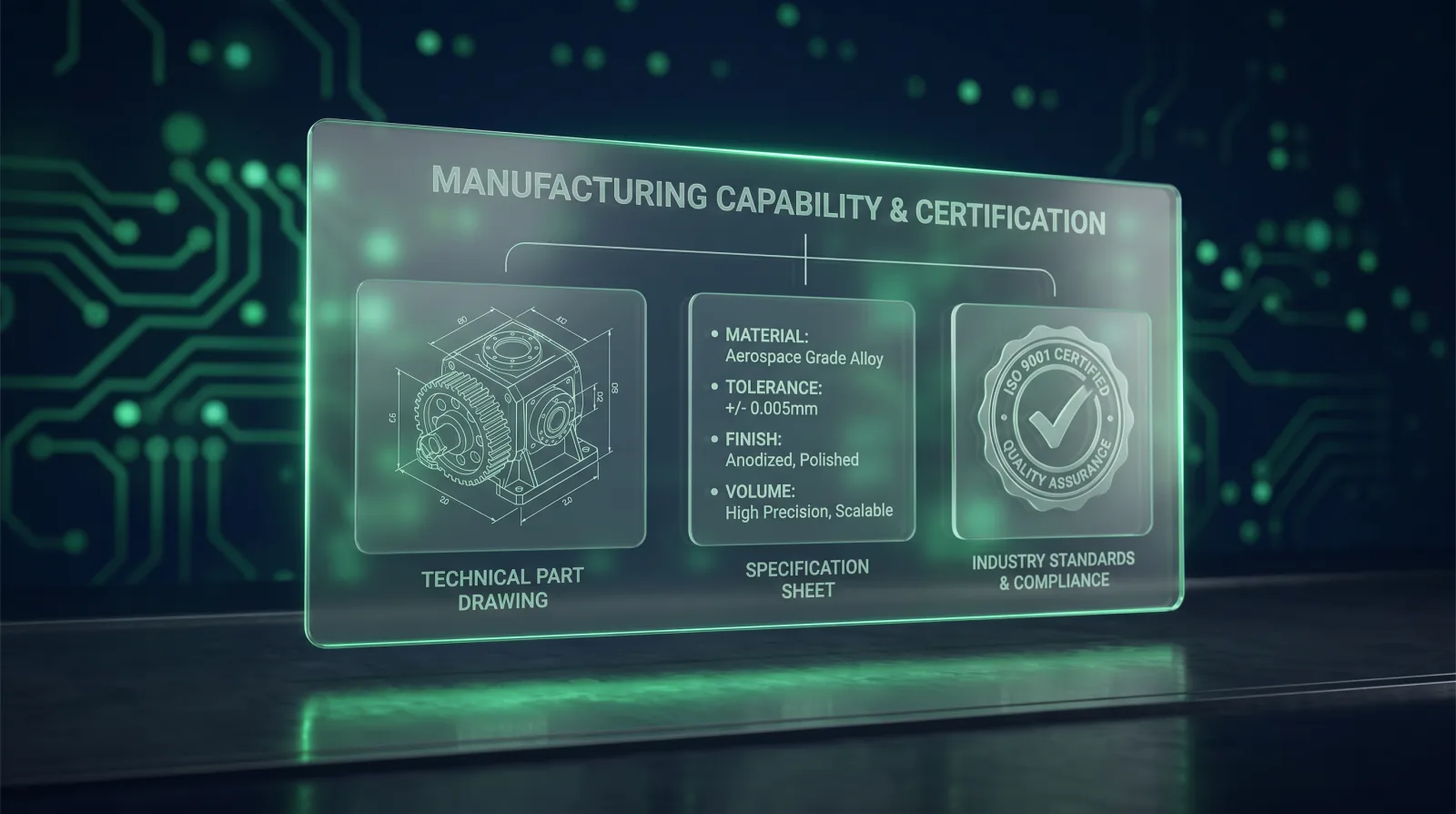
- Certification and quality pages — ISO and industry accreditations, quality processes (vital for B2B trust).
- Case studies — proof you have delivered similar work, powerful with technical buyers.
- Technical content and resources — guides, data and specifications that demonstrate expertise.
Technical buyers want detail and evidence, not marketing fluff. Thorough capability and product pages, backed by certifications and case studies, are what get you shortlisted. Vague, thin pages fail with this audience. A fast, well-structured site that makes technical information easy to find is essential (see what makes a great business website).
Why is Technical Content So Powerful for Manufacturers?
Content marketing is a natural fit for manufacturers because technical buyers value genuine expertise, and there is huge search demand for it:
- Technical guides and how-tos — material selection, process comparisons, design-for-manufacture advice.
- Specifications and data — reference content buyers repeatedly search and link to.
- Application content — solving specific problems in specific industries.
- Standards and compliance — explaining certifications and requirements relevant to your buyers.
This content does several jobs at once: it captures buyers early in their research, demonstrates deep expertise that builds trust, earns links and citations from technical sites, and increasingly gets your business cited by AI tools when engineers ask them for suppliers or advice.
Because few manufacturers produce genuinely useful technical content, doing so is a strong competitive advantage, you become the knowledgeable authority buyers trust. This is exactly the kind of expert, people-first content that both Google and AI reward. Our content marketing guide covers building it into a system.

How Do You Handle Long B2B Sales Cycles?
Industrial sales cycles are long and involve multiple decision-makers, so SEO must support the whole journey, not just capture a single click:
- Cover every stage — research content for early-stage engineers, detailed capability pages for evaluation, and clear contact and quote paths for ready buyers.
- Speak to the whole buying committee — engineers want specs, procurement wants reliability and price, quality teams want certifications.
- Capture and nurture — make it easy to request quotes, download specs or sign up; then nurture with email and content over the long cycle.
- Build trust over time — repeated visibility in search and useful content keep you front of mind until a project starts.
Because buyers research quietly for weeks or months, the manufacturers that stay visible and useful throughout are the ones shortlisted when the enquiry finally comes. SEO's compounding, always-on presence is ideally suited to this. Pairing it with clear conversion paths (a job for CRO) turns that visibility into quote requests.
What Results Can a Manufacturer Expect from SEO?
Manufacturing SEO compounds, and while volumes are lower than consumer sectors, the value per lead is high:
- Months 1 to 3: foundations, technical fixes, capability, product and certification pages, initial technical content. Early ranking movement on specific terms.
- Months 3 to 6: climbing rankings for your capabilities and applications; a rising flow of qualified quote requests.
- Months 6 to 12+: ranking across your processes, products and industries, with a steady stream of high-value B2B enquiries and reduced reliance on directories and trade shows.
Because a single industrial contract can be worth a great deal and often recurring, even a modest number of new buyers from search delivers a strong return. Manufacturers that build a genuine content and capability presence tend to establish a durable advantage, competitors relying only on directories cannot easily match it.
If you would like to know where your business stands and the opportunity in your capabilities and sectors, book a free SEO audit and we will map it out.