

What Makes a Great Business Website?
A great business website does one job brilliantly: it turns visitors into customers. To do that in 2026 it needs to load fast, work perfectly on mobile, make it instantly clear what you do and why to choose you, be built to rank in Google, and guide visitors to enquire or buy. Everything else is detail.
Too many business websites are expensive digital brochures, nice to look at, but slow, unclear and invisible in search. A great one is your hardest-working salesperson: found by the right people, trusted in seconds, and easy to act on. This guide breaks down exactly what separates the two, so you know what to build or fix, and what to look for if you are choosing a web development partner.
Why Does Website Speed Matter So Much?
Speed is non-negotiable. Slow sites lose customers and rankings: most visitors abandon a page that takes more than a few seconds to load, and Google uses page speed (via Core Web Vitals) as a ranking factor.
The key metrics are LCP (how fast the main content loads), INP (how responsive the page feels to interaction) and CLS (how stable the layout is). Common culprits for slow sites are huge unoptimised images, bloated page builders, and heavy scripts.
A fast site is better for users, ranks better, and converts better, a rare win-win-win. It is also one of the most common things a technical SEO review flags. If your site is slow, fixing it is usually one of the highest-ROI improvements you can make, and our technical SEO checklist shows where to look.

Why is Mobile-First Design Essential?
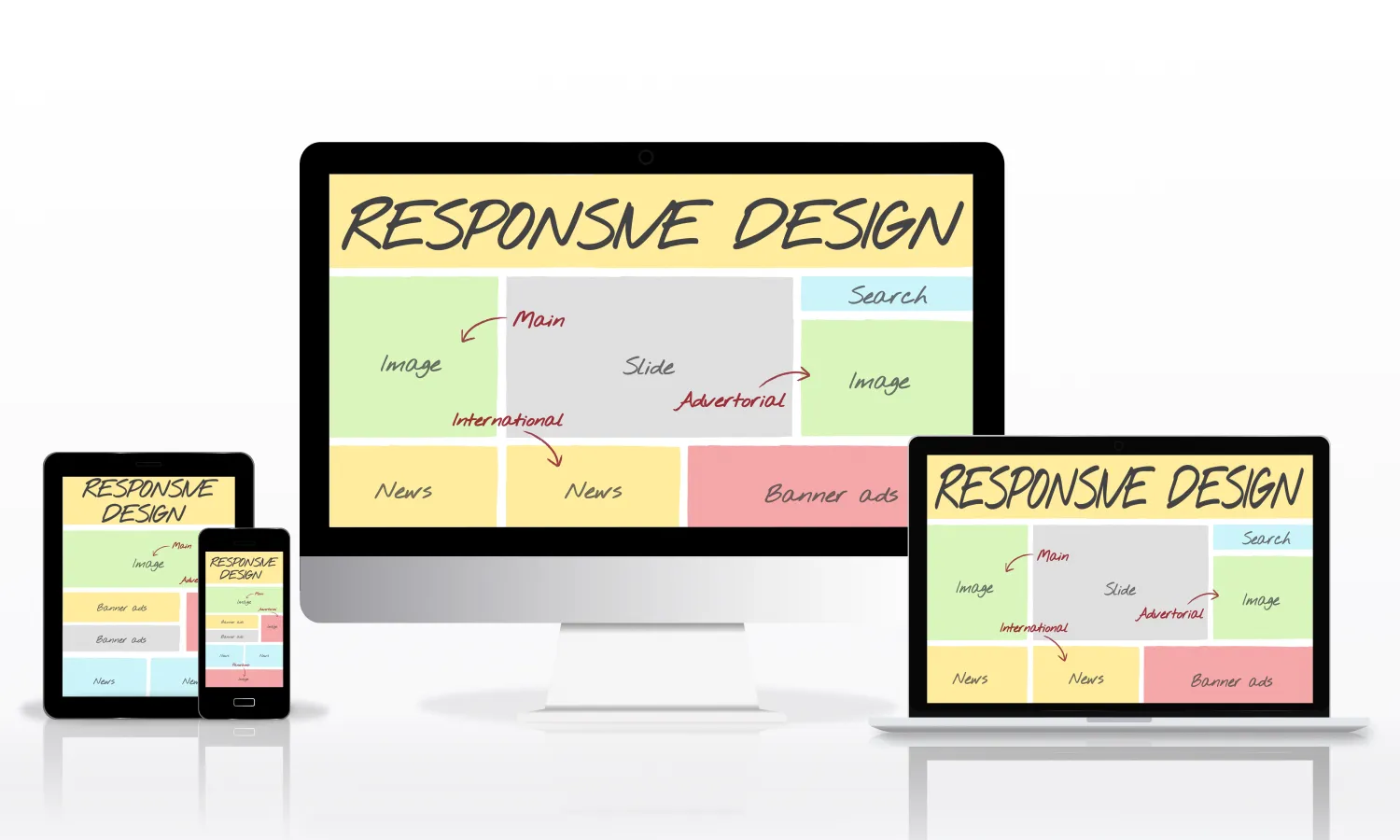
The majority of web traffic, and most local searches, now happen on mobile, and Google indexes the mobile version of your site first. A website that only works well on desktop is failing most of its visitors.
Mobile-first means designing for the phone screen first, then scaling up: readable text without zooming, tappable buttons, fast loading on mobile data, and a layout that works one-handed. Crucially, your calls to action, phone number and enquiry form must be effortless on a small screen.
Many older business websites were built desktop-first and feel awkward on a phone, which quietly costs enquiries every day. If your site is hard to use on mobile, you are losing the majority of your potential customers before they even read your offer.
How Does a Website Get Found in Google?
A beautiful website nobody can find is a wasted investment. To get found, a site must be built with SEO in mind from the ground up:
- Crawlable, well-structured pages Google can read and index.
- A page for each thing you offer, targeting how customers actually search.
- Fast, mobile-first performance (as above).
- Clean technical foundations — proper headings, metadata, schema and internal linking.
- Genuinely useful content that answers customer questions.
This is why "SEO-friendly" cannot be bolted on afterwards, it needs to be baked into the build. A site built by designers who ignore SEO often has to be partly rebuilt to rank. Our guide on how to get found online covers the wider picture your website sits at the centre of.
What Makes a Website Convert Visitors into Customers?
Traffic is pointless if the site does not convert. The elements that turn visitors into enquiries:
- Instant clarity — within seconds, a visitor should know what you do, who for, and why you.
- Obvious calls to action — clear, repeated prompts to call, book or enquire.
- Trust signals — reviews, results, credentials, guarantees and real photos.
- Simple, low-friction forms — ask only what you need.
- A logical journey — guiding visitors from landing to action without dead ends.
This is the domain of conversion rate optimisation, and it is where small changes produce big revenue gains. A site that converts 4% instead of 2% doubles your customers from the same traffic, no extra marketing spend required. Design should always serve conversion, not just aesthetics.
How Important is Content on a Business Website?
Content is what makes a website useful, rankable and persuasive. Beyond your core service and about pages, strong business sites include:
- Clear service pages for each thing you offer, written for customers and search engines.
- Answers to common questions that build trust and capture informational searches.
- Proof — case studies, results and testimonials.
- Helpful guides and resources that attract visitors earlier in their journey (the role of content marketing).
Thin websites with a couple of vague pages rank poorly and persuade no one. Content is also what feeds SEO and increasingly what gets you cited by AI. A great website treats content as a core asset, not an afterthought bolted on once the design is done.

How Do You Choose a Web Development Agency?
If you are hiring out your website, choose carefully, the wrong build costs you twice. Look for an agency that:
- Builds for SEO and speed, not just looks — ask how they handle Core Web Vitals and search.
- Designs for conversion — ask to see how their sites turn visitors into enquiries, with examples.
- Owns performance, not just delivery — a pretty site that does not rank or convert has failed.
- Gives you ownership — you should own your site, domain and content.
- Shows relevant results — real examples in your sector, not just a portfolio of nice visuals.
Beware anyone selling a cheap, templated site with no thought for SEO or conversion, it is the most expensive kind of website, because you pay again to fix it. Our website development service builds sites designed to rank and convert from day one.
How Much Should a Business Website Cost?
UK business website pricing spans a wide range: roughly £1,000–£3,000 for a small, template-based site, £3,000–£10,000 for a custom small-business site built for SEO and conversion, and £10,000+ for larger, complex or e-commerce builds.
The cheapest option is rarely the best value: a bargain site that is slow, invisible in search and poor at converting costs you far more in lost customers than it saved upfront. Judge cost against what the site is meant to achieve, a website that generates enquiries every week is an asset, not an expense.
If you are planning a new site or wondering why your current one is not delivering, book a free audit and we will show you exactly what is holding it back and what a high-performing version would need.