

What is a Digital PR Agency?
A digital PR agency earns your business coverage and authoritative backlinks from online publications, journalists and industry sites, blending traditional PR storytelling with modern SEO. Where old-school PR chased column inches, digital PR chases links, brand mentions and referral traffic from the sites your customers and search engines already trust.
It is one of the most powerful ways to build the authority that drives rankings, because a single link from a national publication can move your domain further than hundreds of low-quality directory links. This guide explains what a digital PR agency actually does, how it helps your SEO and reputation, what it costs, and how to know if you need one. For the mechanics of the links it earns, pair it with our link building guide.
What is the Difference Between Digital PR and Traditional PR?
Both aim to build reputation through earned media, but they optimise for different outcomes:
- Traditional PR targets print, broadcast and brand awareness. Success is measured in coverage, reach and sentiment. A mention with no link still counts.
- Digital PR targets online publications and measures success in backlinks, referral traffic, brand mentions and rankings as well as coverage. Every placement is chosen partly for its SEO value.
Digital PR also uses data and search insight to create stories journalists want, and it works hand in hand with your wider SEO strategy. In practice the best campaigns deliver both: genuine brand-building and the authoritative links that move you up Google. Traditional PR builds fame; digital PR builds fame that also ranks.

How Does Digital PR Help Your SEO?
Backlinks remain one of Google's strongest ranking signals, and digital PR is the most sustainable way to earn the best ones. Its SEO impact comes through:
- High-authority backlinks from publications with strong domain ratings, worth far more than volume-based link building.
- Relevance and trust from being covered by respected sources in your sector.
- E-E-A-T signals for people-first, expertise-driven ranking, especially important for YMYL topics.
- Referral traffic from readers who click through.
Unlike buying links (which risks penalties), digital PR earns them editorially, which is exactly what Google wants to reward. It is the natural upgrade to standard link building, and a core part of how modern businesses get found online.
What Does a Digital PR Agency Actually Do?
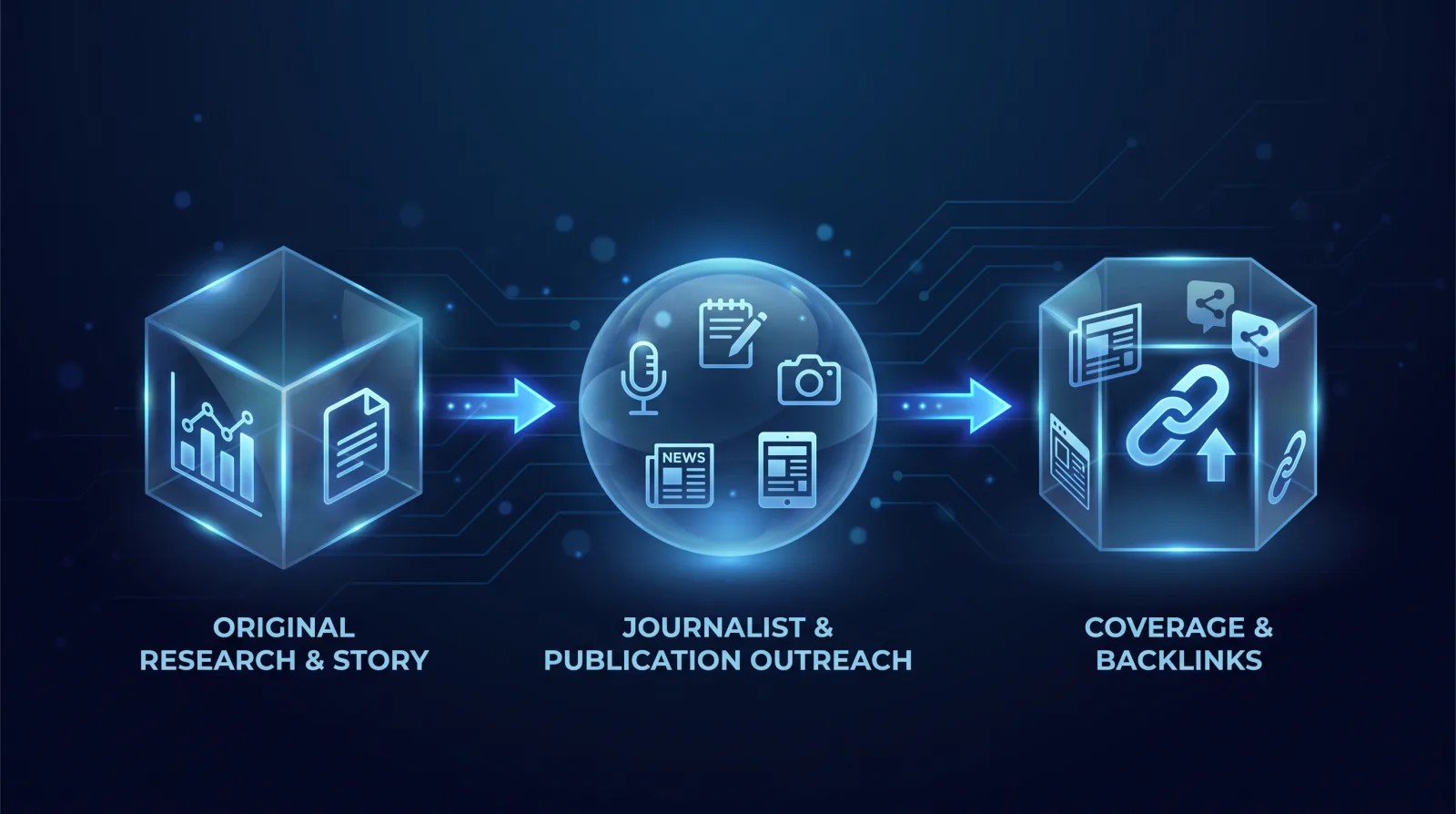
A good digital PR agency runs a structured programme, not one-off press releases:
- Data-led campaigns — original research, surveys and studies that give journalists a story worth linking to.
- Expert commentary — positioning your team as sources journalists quote (reactive PR and services like journalist request platforms).
- Newsjacking — reacting fast to breaking news with relevant, quotable insight.
- Creative content and assets — interactive tools, maps, guides and visuals that attract links naturally.
- Targeted outreach — pitching the right story to the right journalist on the right publication.
- Digital asset PR — earning coverage for launches, milestones and thought leadership.
The common thread is a genuinely newsworthy hook: agencies that just email press releases into the void fail, while those that lead with data and relevance earn coverage consistently.
How Does Digital PR Enhance Your Online Reputation?
Beyond links, digital PR shapes what people, and increasingly AI, see when they research you. Being covered by trusted publications:
- Builds credibility and trust with prospects who check you out before buying.
- Improves your branded search results, pushing positive coverage up the page.
- Feeds AI recommendations — tools like ChatGPT and Gemini recommend businesses the web already talks about, so third-party coverage directly influences whether you get named. See how to get recommended by ChatGPT.
- Creates lasting authority that compounds, unlike ads that vanish when spend stops.
This reputation layer is why digital PR now sits at the centre of both SEO and GEO (Generative Engine Optimisation): the same coverage that ranks you also gets you recommended.
What Makes a Good Digital PR Campaign?
The difference between a campaign that earns dozens of authoritative links and one that earns none usually comes down to the hook. Strong campaigns share these traits:
- A genuinely newsworthy angle — proprietary data, a provocative finding, a timely tie-in, or a human story.
- Relevance to your business — links only help if they are topically related to what you do.
- The right target publications — a few high-authority, relevant placements beat many weak ones.
- Tailored outreach — pitches written for the journalist's beat and the publication's tone.
- Speed and consistency — reacting quickly and campaigning regularly, not sporadically.
Weak campaigns pitch generic press releases with no story; strong ones give journalists something their readers actually want, which is why the creative and data work matters as much as the outreach.

How Do You Measure Digital PR Success?
Digital PR should be measured on commercial and SEO outcomes, not vanity coverage counts:
- Quality backlinks earned — number, and crucially the authority (domain rating) and relevance of the linking sites.
- Coverage and brand mentions in relevant, reputable publications.
- Referral traffic from placements, and its behaviour on your site.
- Ranking improvements for your target keywords as authority builds.
- Branded search and reputation signals over time.
Beware agencies that report only "pieces of coverage" with no link or authority data. The value of digital PR is the durable authority it builds, so the reporting should tie coverage back to links, rankings and, ultimately, enquiries and revenue.
How Much Does Digital PR Cost in the UK?
UK digital PR is typically bought on a monthly retainer, with realistic 2026 ranges:
- £1,500–£3,000/month — a focused programme, a campaign every month or two, suited to SMEs building authority steadily.
- £3,000–£6,000/month — regular data-led campaigns plus reactive PR, for competitive niches and faster growth.
- £6,000+/month — high-output programmes for national brands and very competitive sectors.
Project-based data campaigns often run £3,000–£10,000+ each. As with all agency work, seniority and quality matter more than headline price: cheap "link insertion" services are not digital PR and carry penalty risk. For the wider picture on agency pricing, see our guide to what a digital marketing agency costs.
How Long Does Digital PR Take to Work?
Digital PR delivers on two timelines. Coverage and links can land within the first month or two of a strong campaign, giving early referral traffic and brand exposure. Ranking impact from the authority those links build follows more slowly, usually becoming visible over three to six months and compounding from there as your link profile strengthens.
It is a cumulative investment: each campaign adds to the authority base, so results accelerate over time rather than resetting. This is why digital PR suits businesses playing a serious long game for organic and AI visibility, and why it pairs so well with ongoing SEO rather than being treated as a one-off burst.
Do You Need a Digital PR Agency?
Digital PR is worth it if you are in a competitive market where authority is the deciding factor, if you want to rank for hard terms, or if you want to build the reputation that gets you recommended by both customers and AI. It is less urgent if you have not yet fixed your technical SEO foundations or your Google Business Profile, do those first.
Most businesses lack the media relationships, data-story skills and outreach time to run digital PR well in-house, which is exactly where a specialist digital PR agency earns its fee. If you want to know whether digital PR is the right next move for your growth, book a free audit and we will show you where authority is holding your rankings back.