

SEO in One Paragraph
SEO — Search Engine Optimisation — is the practice of getting your website to rank on search engines like Google so people click through to you. It rests on three pillars: relevance (content that matches intent), authority (backlinks and trust signals), and technical health (a fast, crawlable site). For a full primer, see our guide on what SEO is and how it works. SEO is mature, measurable, and still drives the majority of web traffic — it is not going anywhere.
What is GEO (Generative Engine Optimisation)?
GEO — Generative Engine Optimisation — is the practice of influencing how AI tools represent your brand when they generate answers. Instead of optimising to rank on a results page, you optimise to be the brand that ChatGPT recommends, that Perplexity cites, that Gemini describes accurately, and that Google's AI Overviews pull into their summary.
Where SEO targets a search engine, GEO targets a generative engine — a model that writes an original answer rather than returning a list of links. The output is a paragraph, not a page of results, and your goal is to be inside that paragraph.
GEO is the discipline behind our GEO agency service, and it sits alongside AEO (Answer Engine Optimisation) as the two halves of modern AI-search visibility.

GEO vs SEO: The Key Differences
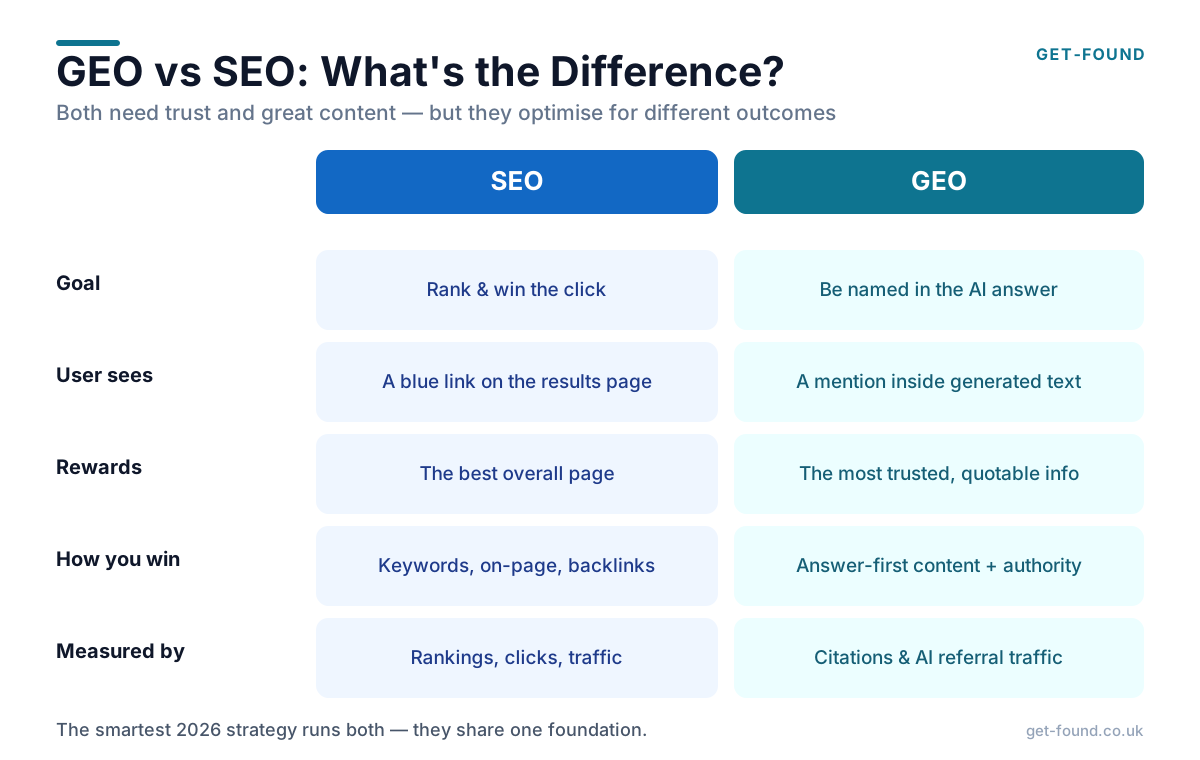
Goal — SEO aims to rank and win the click. GEO aims to be named, cited, or recommended inside an AI answer.
The result the user sees — SEO produces a blue link on a results page. GEO produces a mention within generated text (sometimes with a click, sometimes not).
What gets rewarded — SEO rewards the best overall page for a query. GEO rewards the clearest, most trustworthy, most corroborated information, wherever it lives — including off your own site.
How you win — SEO: keywords, on-page optimisation, backlinks, technical health. GEO: extractable answer-first content, structured data, original data, and broad third-party authority (reviews, press, mentions) that teaches the model to associate your brand with a topic.
Measurement — SEO: rankings, clicks, organic traffic. GEO: brand mentions in AI answers, AI referral traffic, share of answer versus competitors, branded-search lift.
The overlap is large: both need trustworthy content and genuine authority. The difference is that GEO cares less about your page's position and more about your brand's presence in the model's answer.
Do You Actually Need Both?
For most UK businesses in 2026, yes — and here is the honest reasoning.
SEO still drives the largest share of measurable traffic and leads. Abandoning it to chase AI would be a mistake; the click-through and revenue are real and trackable today.
But a rising share of high-intent research now happens inside AI tools, and that share is growing fast. If a buyer asks ChatGPT to shortlist agencies, or Gemini to compare products, the brands named in that answer get on the shortlist — and the ones that are not, simply do not exist for that buyer.
The pragmatic position: SEO is your revenue engine today; GEO is your insurance and growth channel for where search is heading. The two share a foundation, so investing in one strengthens the other. Doing both is far cheaper than doing them separately, because the same authority and content work feeds both.
How GEO and SEO Work Together
They are not competitors — they compound.
Strong SEO is a prerequisite for GEO: if search engines cannot crawl, understand and trust your site, generative engines will not cite it either. The technical SEO foundation, clean structure, and E-E-A-T signals you build for Google are the exact things an AI model looks for.
Equally, GEO work lifts SEO. When AI tools recommend you, people search your brand name, visit your site, and link to it — all of which feed traditional rankings. Digital PR and reviews earned for GEO become backlinks and trust signals for SEO.
The smartest 2026 strategy runs them as one programme: publish answer-first, well-structured, genuinely authoritative content once, and optimise it to both rank and be cited.
How to Get Started With GEO
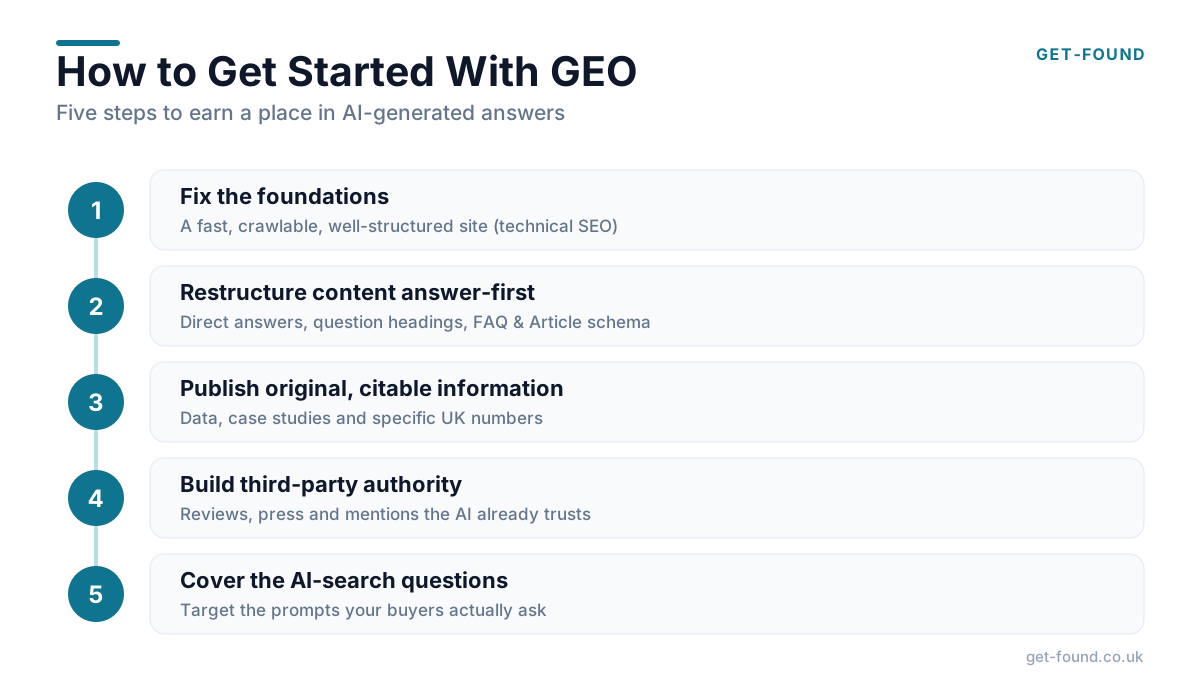
A practical starting sequence:
1. Fix the foundations. Ensure your site is fast, crawlable and structured — the same technical SEO basics that underpin ranking.
2. Restructure key content answer-first. Lead with the direct answer, use question-based headings, add FAQ and Article schema. This is core AEO work.
3. Publish original, citable information. Data, case studies, specific UK numbers — the things a model cannot generate on its own and will therefore quote.
4. Build third-party authority. Reviews, press, and mentions on sources AI already trusts. Our digital PR service drives this.
5. Cover the AI-search questions explicitly. See how to rank in Google AI Overviews and how to get cited by ChatGPT, Perplexity and Gemini for the tactical detail.
How Do You Measure GEO?
GEO is measurable, even though it is newer than SEO reporting:
- Share of answer — for your priority questions, how often do ChatGPT, Perplexity, Gemini and AI Overviews mention you versus competitors? Track this on a schedule.
- AI referral traffic — GA4 surfaces referrals from AI assistants; watch that channel.
- Branded search lift — AI recommendations drive people to Google your name; rising branded search is a strong proxy.
- Sentiment and accuracy — is the AI describing your brand correctly and positively? Correcting an inaccurate model description is itself a GEO win.
If you want a baseline, we run a free GEO visibility report that shows exactly how your brand currently appears across the major AI tools — and where the gaps are.