
What is the Most Important Marketing for a Restaurant?
The most important marketing for a restaurant is being the obvious choice when hungry people nearby search on their phone. Most diners decide where to eat by searching "restaurants near me", "best [cuisine] in [town]" or "[town] restaurants open now", often minutes before booking. Winning that moment, through local SEO, your Google Business Profile and reviews, drives more bookings than anything else.
Social media, email and a good website all matter, but they support that core. A restaurant that ranks at the top of "restaurants near me", looks fantastic with recent photos and glowing reviews, and is effortless to book will fill tables that flashy campaigns alone never would. This guide covers the full picture, but keep that priority front of mind: local visibility first, everything else amplifies it.
Why is Local SEO Essential for Restaurants?
Local SEO is essential because dining is inherently local and immediate. The searches that fill tables ("restaurants near me", "best pizza in [town]", "brunch [area]") are answered by Google's local map pack, the three listings with a map shown above everything else.
Ranking there puts you in front of diners at the exact moment of decision, often while they are standing on the street deciding where to go. That placement is driven by your Google Business Profile, proximity, reviews and relevance. A restaurant buried on page two is invisible to the "near me" crowd, no matter how good the food is.
This is why local SEO is the backbone of restaurant marketing. Get it right and you capture the constant stream of local, ready-to-eat demand. Our local SEO guide and map pack ranking guide explain how.
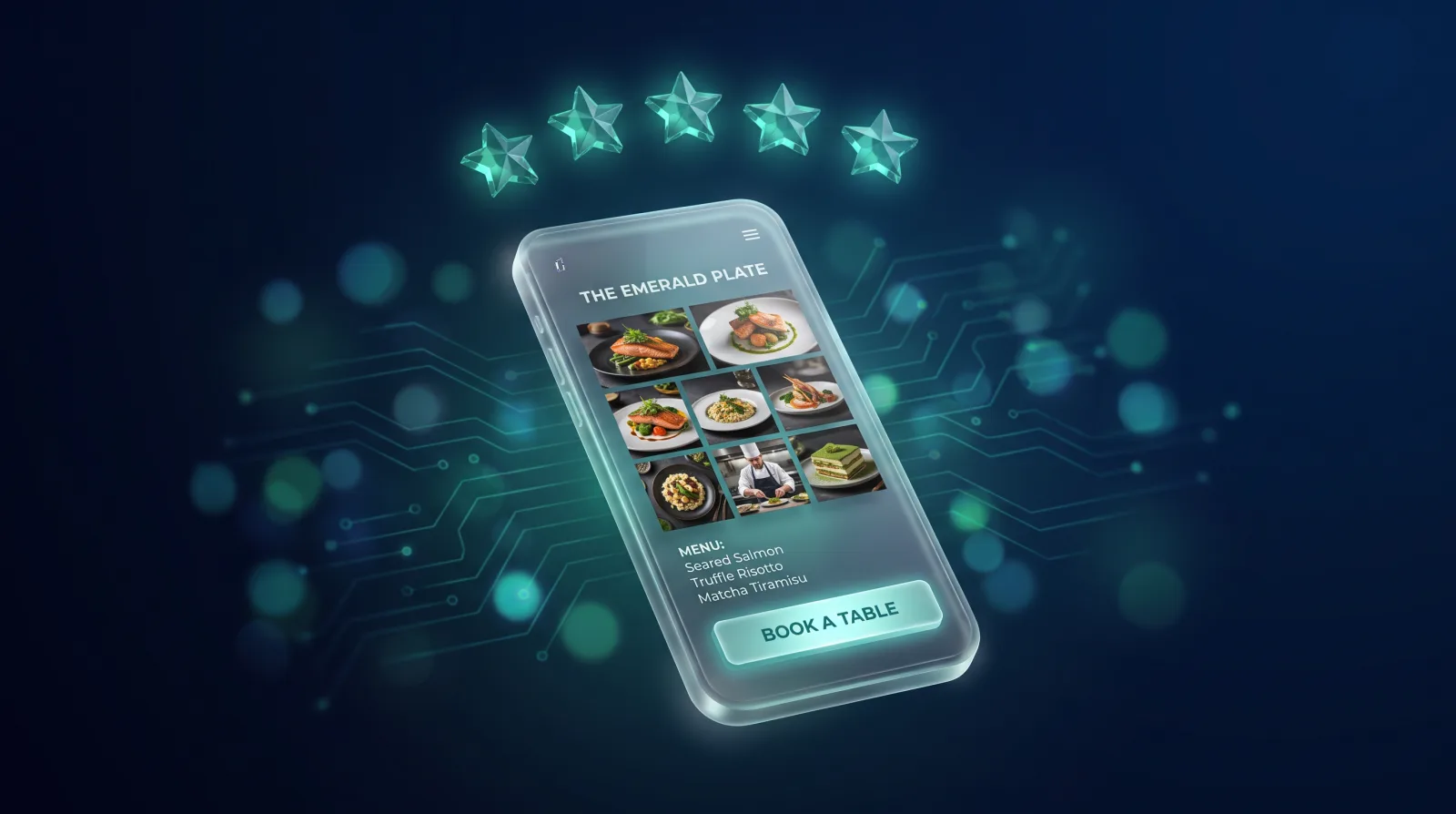
How Do You Optimise Your Google Business Profile?
Your Google Business Profile is the most important marketing asset a restaurant has, and it is free. To make it drive bookings:
- Complete everything: name, address, phone, cuisine categories, opening hours (keep them accurate, especially holidays).
- Add a menu and a link to book or order, remove friction between "interested" and "booked".
- Upload lots of great photos of food, interior and atmosphere, and keep adding them; photos hugely influence choice.
- Post regularly: specials, events, seasonal menus.
- Collect and reply to reviews consistently.
Google increasingly lets people browse menus, see photos and book without leaving the search results, so your profile is your shopfront. A rich, active, well-reviewed profile converts searchers into diners. Our Google Business Profile guide covers every setting.
How Important Are Reviews for Restaurants?
Reviews are make-or-break for restaurants. They are both a local ranking factor (quantity, rating, recency and relevance affect your map pack position) and the single biggest influence on whether a searcher chooses you. Diners scan star ratings and recent comments before deciding, and a restaurant with 400 recent four-and-five-star reviews beats one with 40 every time.
What matters most is a steady stream of fresh, genuine reviews and thoughtful replies to all of them, including the occasional negative one (a gracious response reassures future diners). Star rating and review recency weigh heavily, momentum matters.
The practical move is to make reviewing effortless: a QR code on the table or receipt, a friendly ask from staff at the right moment. Most restaurants leave this to chance and lose both rankings and bookings. Our guide on getting more Google reviews gives you a simple, repeatable system.
What Role Does Social Media Play for Restaurants?
Social media is where restaurants build appetite, atmosphere and a following, and food is perfect for it. Instagram, TikTok and Facebook let you show off dishes, behind-the-scenes moments and events in a way that drives cravings and shares.
Used well, social media:
- Builds a local following that returns and brings friends.
- Creates discovery through shareable, appetising content (a viral dish can pack a room).
- Showcases atmosphere so people know what experience to expect.
- Drives bookings with clear links and calls to action.
The mistake is treating social as the whole strategy, it builds brand and demand, but local SEO and reviews capture the people ready to book now. The two work together: social creates the desire, search captures it. Our social media marketing guide covers how to do it without burning hours a day.
What Should a Restaurant Website Do?
Many restaurants neglect their website, assuming the profile and social are enough, but a good site closes the loop and captures direct bookings (saving commission on third-party platforms). A restaurant website should:
- Load fast on mobile (most visits are phones, often on the move).
- Make the menu easy to find and keep it current, no PDFs that will not open.
- Offer effortless booking and ordering, front and centre.
- Show great photos and atmosphere so people know what to expect.
- Include key details clearly: location, hours, parking, dietary options, contact.
A fast, mobile-first site that makes booking one tap away turns interested searchers into confirmed tables, and direct bookings keep the margin that delivery and booking platforms take. See what makes a great business website for the fundamentals that apply here.
Should Restaurants Use Paid Ads?
Paid ads can work for restaurants, but they are usually a supplement, not the foundation. Where they earn their place:
- Launches and events: targeted local social ads to drive awareness of an opening, new menu or special night.
- Filling quiet periods: promoting midweek offers to a tight local audience.
- Retargeting: reminding people who visited your site or profile.
For everyday "near me" demand, strong local SEO and reviews capture it far more cost-effectively than paying per click, that demand already exists and is free to win if you rank. Ads make most sense to create demand (awareness, events) rather than to capture demand that local SEO handles for free.
So the smart order is: nail local SEO, reviews and your profile first, then layer in targeted social ads for launches and quiet periods. Spending on ads while your free local presence is weak is paying for what you could earn.
How Do You Put a Restaurant Marketing Plan Together?
A practical restaurant marketing plan, in priority order:
- Optimise your Google Business Profile fully, with great photos, menu, booking link and accurate hours.
- Build a steady review flow with an easy ask (table QR codes) and reply to every review.
- Fix the fundamentals of your website: fast, mobile-first, easy menu and direct booking.
- Strengthen local SEO: consistent details everywhere, local relevance, ratings and reviews.
- Show up on social with appetising, consistent content to build a following and demand.
- Add targeted ads for launches, events and quiet periods once the basics are humming.
The restaurants that win are not the ones shouting loudest, they are the ones that are easy to find, look irresistible, and are effortless to book. Get the local foundations right and the tables follow. If you would like a tailored plan and an audit of where you are losing bookings, book a free consultation and we will map it out.