

What is Social Media Marketing?
Social media marketing is the practice of using platforms like Instagram, Facebook, LinkedIn, TikTok and YouTube to build your audience, brand and sales, through a mix of organic content (posts, video, engagement) and paid social ads. It is where you reach customers based on who they are and what they are interested in, often before they are actively searching for you.
Done properly, social media marketing is not about vanity likes; it is a channel that builds demand, nurtures it, and converts it into sales. Done badly, it is content posted into the void with nothing to show for it. This guide covers how UK businesses use social media to drive real commercial results in 2026, from choosing platforms to measuring ROI.
Does Social Media Marketing Actually Drive Sales?
Yes, but only when it is connected to a commercial goal rather than treated as digital wallpaper. The businesses that generate real sales from social do three things differently:
- They lead with value, not product — educational, entertaining or inspiring content earns reach; constant promotion kills it. Aim for roughly 80% value, 20% offer.
- They connect social to a funnel — every campaign has a next step: a landing page, a lead magnet, a retargeting audience, or a booking link.
- They combine organic and paid — organic builds trust and community; paid amplifies reach and drives conversions.
Social rarely closes a sale on the first touch. Its power is creating and nurturing demand that converts later, on social, on search, or direct. Judge it on that whole journey, not last-click likes.
Which Social Platforms Should Your UK Business Use?
You do not need to be everywhere, you need to be where your customers are, doing it well. Choose by audience and format:
- Instagram — visual products, lifestyle, local and B2C brands; strong for Reels and discovery.
- Facebook — broad UK reach, local businesses, community and events; still the backbone of paid social.
- LinkedIn — B2B, professional services, recruitment and thought leadership.
- TikTok — younger audiences, entertaining short video, fast-growing for many sectors.
- YouTube — longer video, how-to content and evergreen discovery (and it doubles as search).
It is far better to run one or two platforms excellently than five poorly. Pick based on where your ideal customers actually spend time and what content you can realistically produce well.
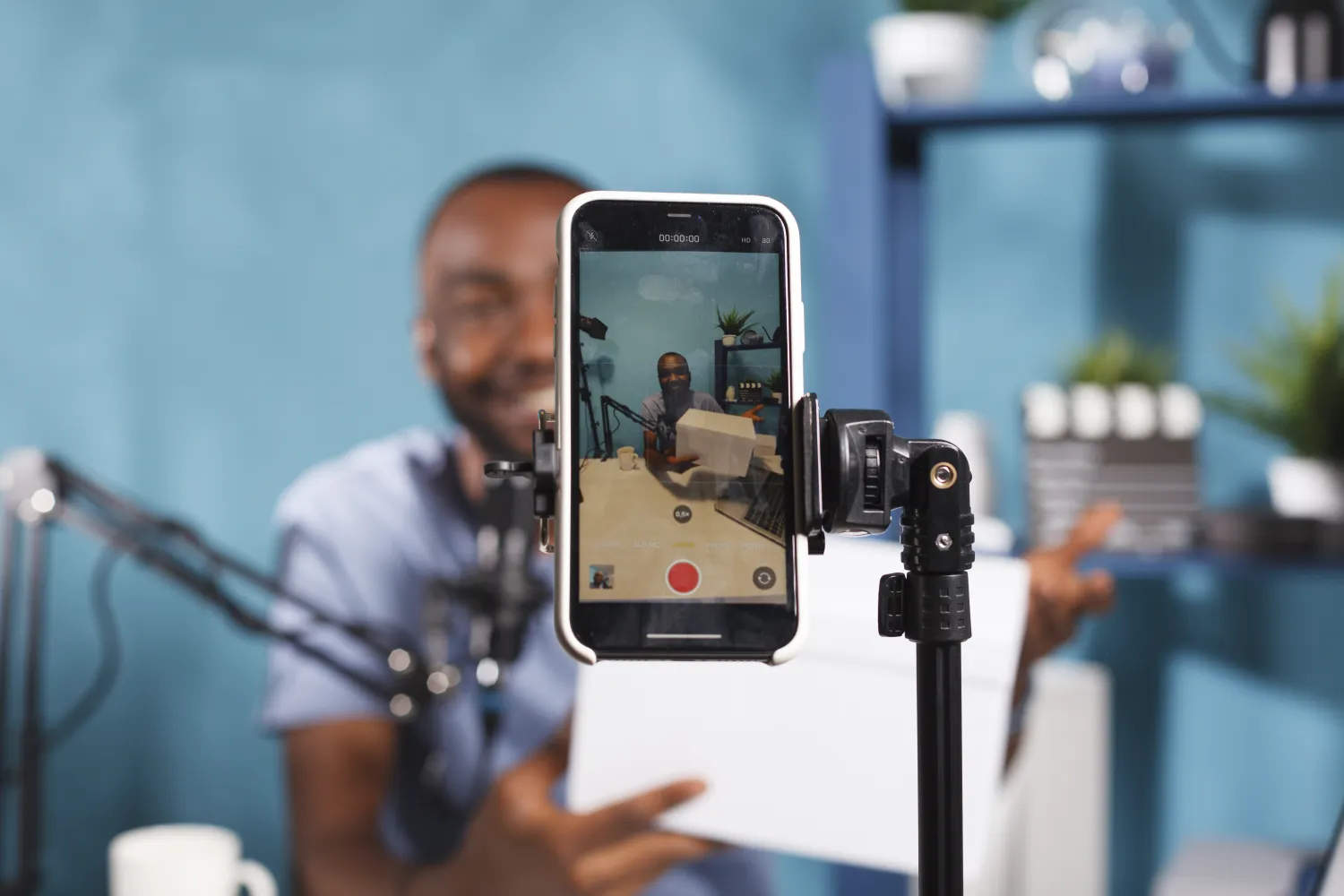
Organic vs Paid Social: What is the Difference and Which Do You Need?
Both matter, and they do different jobs:
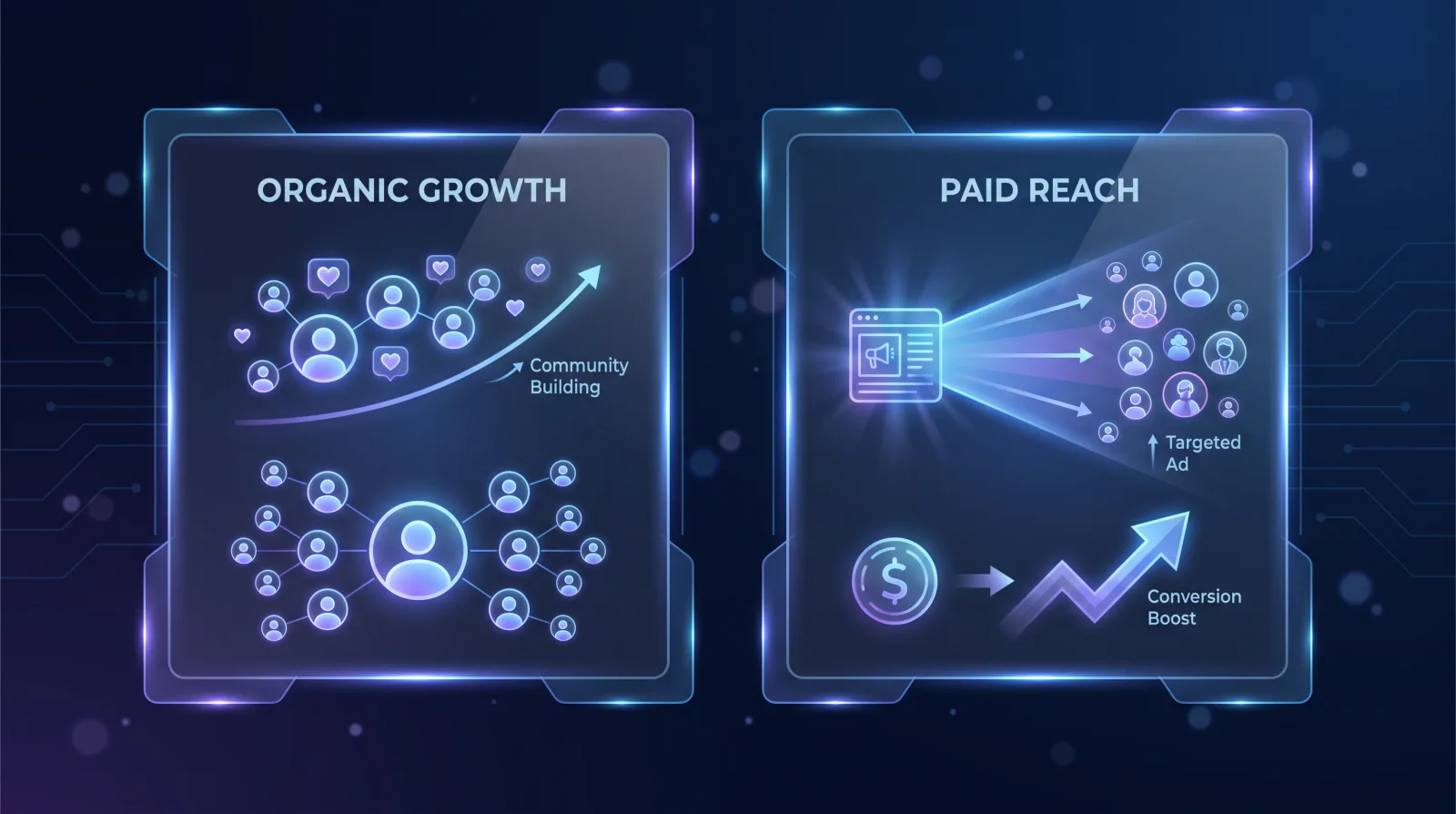
- Organic social — unpaid posts, video and engagement. It builds brand, trust and community over time, but reach is limited and slow. It is your always-on presence.
- Paid social — ads on Meta, TikTok, LinkedIn and more. It buys reach and targeting instantly, drives leads and sales, and lets you scale what works.
Most businesses need both: organic to build credibility and give paid something to amplify, paid to reach beyond your existing followers and drive measurable conversions. If you are weighing paid social against search, our comparison of Google Ads vs Meta Ads for lead generation is a useful companion. The right split depends on your goals, audience and budget.
What Content Works Best on Social Media?
Social algorithms reward content that holds attention, and audiences reward content that gives them something. What consistently works:
- Short-form video — Reels, TikToks and Shorts drive the most reach across platforms in 2026.
- Value-first educational content — tips, how-tos and myth-busting that make you the helpful expert.
- Behind-the-scenes and human content — people connect with people, not logos.
- Social proof — reviews, results, testimonials and user-generated content.
- Timely and trend-led posts — reacting quickly to what is relevant now.
The biggest mistake is repurposing content built for one platform onto another unchanged. Each platform has its own format and tone, and native-feeling content always outperforms. This is where social overlaps with your wider content marketing: one idea, adapted natively across channels.
How Does Social Media Support SEO and Brand Discovery?
Social media is not a direct Google ranking factor, but it supports discovery and search in several real ways:
- Brand searches — social builds awareness that leads people to search for you by name, a strong trust signal.
- Content amplification — social distribution earns the engagement and links that do help SEO.
- Social search — younger users increasingly search directly on TikTok, Instagram and YouTube, so your presence there is its own discovery channel.
- AI visibility — a consistent, credible brand presence across platforms feeds the signals AI tools use when deciding who to recommend.
So while you should not expect a post to move a Google ranking, a strong social presence makes every other channel, search, content and AI, work harder.
How Do You Build a Social Media Strategy That Drives Sales?
A strategy turns random posting into a system. Build it around:
- Clear goals — awareness, leads, sales or community, with a target for each.
- The right platforms — chosen by audience, not habit.
- A content plan — pillars, formats and a realistic, consistent cadence.
- A funnel — how a follower moves from first view to customer (content → engagement → landing page → conversion → retargeting).
- A paid layer — amplifying your best organic content and driving conversions.
- Measurement — the commercial metrics that prove it is working.
Without this, social becomes busywork. With it, every post has a job and the channel becomes a predictable source of demand, exactly the joined-up approach in our digital marketing strategy guide.
How Do You Turn Followers into Customers?
Followers are not the goal, customers are. Bridging the gap takes deliberate steps:
- Give every campaign a next step — a landing page, offer or booking link, not just a "like and follow".
- Build and use retargeting audiences — re-engage people who watched a video or visited your site; these convert far more cheaply than cold audiences.
- Optimise the destination — social traffic is wasted on a slow or unconvincing landing page, which is where conversion rate optimisation earns its keep.
- Nurture, do not just broadcast — reply, answer questions and build relationships that lead to enquiries.
The brands that "win" on social are rarely the ones with the most followers, they are the ones with the clearest path from content to customer.
How Do You Measure Social Media ROI?
Social media ROI is where most businesses go wrong, tracking likes instead of outcomes. Measure what matters:
- Leads and sales attributed to social, via tracked links, forms, promo codes and pixel data.
- Cost per lead and per acquisition from paid social.
- Website traffic and conversions from social channels.
- Audience growth and engagement rate as leading indicators, not end goals.
- Assisted conversions — social often influences sales that close elsewhere, so give it fair credit.
Set up proper tracking (pixels, UTMs and CRM integration) so you can tie social activity to revenue. Judged this way, social stops being a cost centre you can't justify and becomes a channel you can confidently scale.
How Much Does Social Media Marketing Cost, and Do You Need an Agency?
UK social media marketing is typically a monthly retainer: roughly £500–£1,500/month for organic management of one or two platforms, £1,500–£4,000+/month for a fuller organic-plus-paid programme, plus your ad spend on top. Costs scale with platforms, content volume (especially video) and paid budget.
You can run social in-house if you have the time and creative skill, but consistency, video production, paid-ads expertise and strategy are where most businesses struggle. A good social media agency brings the strategy, creative and paid know-how to turn social into a genuine sales channel rather than a chore. If you want to know which platforms and approach would drive the most sales for your business, book a free audit and we will map it out.