
What is Inbound Marketing?
Inbound marketing is a strategy for attracting customers to you by being genuinely useful and easy to find, rather than interrupting them with ads or cold outreach. Instead of pushing your message onto people, you earn their attention by answering their questions, solving their problems and showing up when they are already looking.
In practice, inbound marketing means creating helpful content, ranking in search, building trust and making it easy for interested people to engage, so that leads come to you, often already convinced. It is the opposite of chasing: you become the business people find and choose when they have a need.
Done well, inbound builds a compounding source of leads who trust you before they ever get in touch. This guide explains how it works, how it differs from outbound, the channels involved, and how UK businesses use it to grow. It draws on the full toolkit of digital marketing, especially SEO and content marketing.
What is the Difference Between Inbound and Outbound Marketing?
The core difference is direction: inbound attracts, outbound interrupts.
- Outbound marketing pushes your message out to people who are not necessarily looking, cold calls, cold emails, most traditional advertising, direct mail. You go to the customer.
- Inbound marketing pulls interested people towards you, they find you through search, content and recommendations when they already have a need. The customer comes to you.
Neither is inherently "better", but inbound has big advantages for most modern businesses: leads are warmer (they came looking), it compounds over time (content keeps working), and it builds trust rather than annoyance. Outbound can be faster and more targeted for specific campaigns, but it is often more expensive per result and easier to ignore.
Many businesses blend the two, but the shift over the last decade has been decisively towards inbound, because buyers now research online before they buy, and inbound is how you get found and trusted during that research.
How Does Inbound Marketing Work?
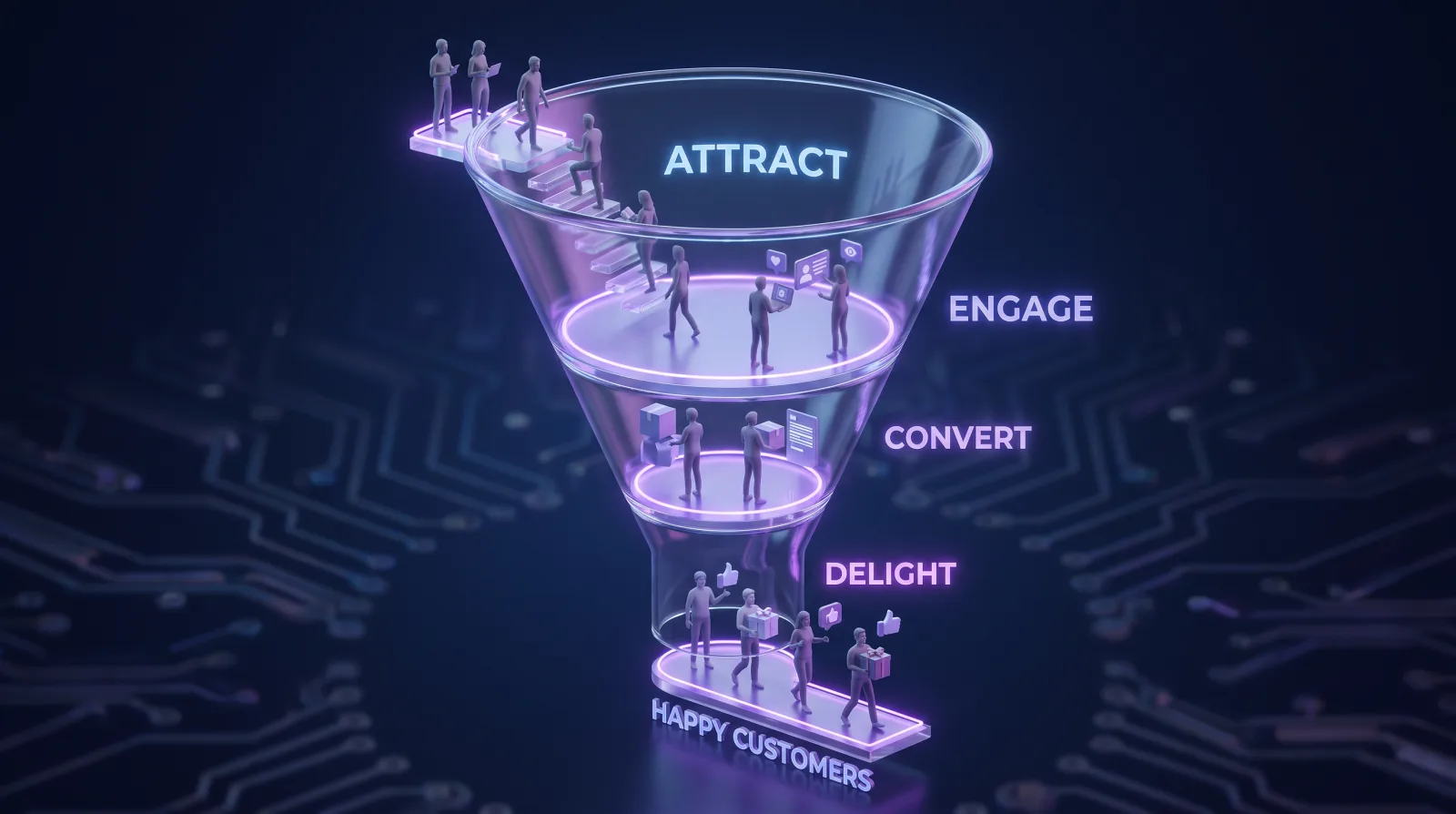
Inbound marketing works by guiding people through a journey from stranger to customer, meeting them with the right thing at each stage:
- Attract — get found by the right people through SEO, content and social, answering the questions they are searching.
- Engage — provide genuinely useful information that builds trust and positions you as the expert.
- Convert — make it easy for interested visitors to take the next step (enquire, download, book).
- Delight — deliver a great experience so customers stay, refer and advocate.
The engine underneath is being useful where your customers are looking. When someone searches a problem you solve and finds your genuinely helpful content at the top, you have earned their attention and trust in one move. That is inbound working. Over time, this creates a flywheel: useful content attracts visitors, some convert, happy customers spread the word, and it all compounds. Our guide on how to get found online covers the "attract" stage in depth.
What Channels Are Used in Inbound Marketing?
Inbound marketing uses the channels that help people find and trust you when they are looking:
- SEO — ranking in Google for the questions and terms your customers search. The backbone of inbound.
- Content marketing — helpful guides, articles, videos and resources that attract and educate (see what content marketing is).
- AI search visibility (AEO/GEO) — increasingly, being the answer AI assistants like ChatGPT recommend when people ask.
- Social media (organic) — building an audience and distributing content.
- Email nurturing — staying useful to people who are interested but not yet ready.
- Your website — the hub that turns attracted visitors into leads.
Notice what is missing: paid ads and cold outreach. Those are outbound tactics, they can complement inbound, but the heart of inbound is earned visibility and trust. SEO and content do the heavy lifting, which is why inbound and SEO are so tightly linked.

Why is Content So Central to Inbound Marketing?
Content is the fuel of inbound marketing, without it, there is nothing to attract people with. Every stage of inbound depends on useful content:
- Attracting — content is what ranks in search and answers people's questions.
- Engaging — content is how you demonstrate expertise and build trust.
- Converting — content (case studies, comparisons, guides) reassures people enough to act.
Crucially, good content compounds: a genuinely useful guide keeps attracting and converting visitors for years, unlike an ad that stops the moment you stop paying. It is also what increasingly gets you cited by AI tools, extending your reach further.
The key word is useful. Inbound content is not thinly veiled sales copy, it earns attention by genuinely helping. Businesses that commit to consistently answering their customers' questions build a durable asset that quietly generates leads. This is why content marketing sits at the centre of any serious inbound strategy.
What Are the Benefits of Inbound Marketing?
Inbound marketing has become the default for many businesses because the benefits compound:
- Warmer leads — people who find you are already interested and researching, so they convert better.
- Lower cost over time — content and SEO keep working without per-click costs, unlike ads.
- Trust and authority — being genuinely helpful positions you as the expert, before any sales conversation.
- Compounding growth — your content library and rankings build on each other year after year.
- Better targeting — you attract exactly the people searching for what you offer.
The trade-off is that inbound takes time to build, it is a compounding investment, not an instant switch. In the early months you are laying foundations; the returns accelerate later. That is why the businesses that win with inbound are the ones that start early and stay consistent, building an asset competitors cannot quickly replicate.

Is Inbound Marketing Right for Your Business?
Inbound marketing suits most businesses where customers research before they buy, which today is almost all of them. It is especially powerful if:
- People search for what you offer — there is demand to capture through SEO and content.
- Your sale involves consideration — trust and education genuinely influence the decision.
- You want sustainable, compounding growth rather than renting attention through ads forever.
Inbound is less suited on its own to pure impulse purchases or when you need results this week, there, paid channels play a bigger role. In reality, most businesses blend inbound (for durable, compounding growth) with some paid (Google Ads, social) for speed. The point is that inbound should usually be the foundation, because it builds an owned asset rather than an ongoing cost.
If you would like a clear plan for attracting more of the right customers through inbound, book a free audit and we will show you the biggest opportunities to get found and chosen.